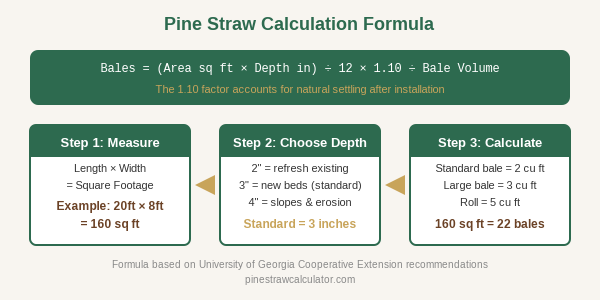
How Much Pine Straw Do I Need? A Simple Calculation Guide
A standard pine straw bale covers about 8 sq ft at 3-inch depth. Use the formula (area × depth ÷ 12 × 1.10) ÷ bale volume to find your exact bale count.
Read ArticleHow much to buy, which type to choose, when to put it down, and what it actually costs — written for homeowners and landscapers who want the right answer before they open their wallets.
A standard pine straw bale covers about 8 sq ft at 3-inch depth. Use the formula (area × depth ÷ 12 × 1.10) ÷ bale volume to find your exact bale count.
Read Article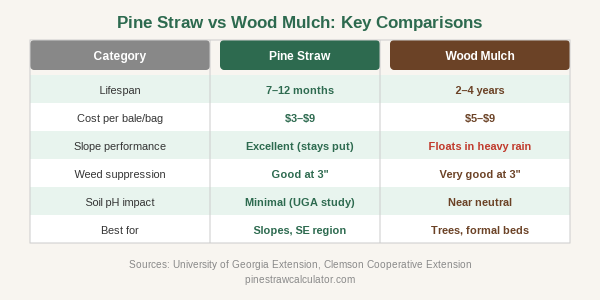
Pine straw or wood mulch? Pine straw costs less upfront and holds slopes well. Wood mulch lasts 2–3 years and is cheaper long-term. Here's how to choose.
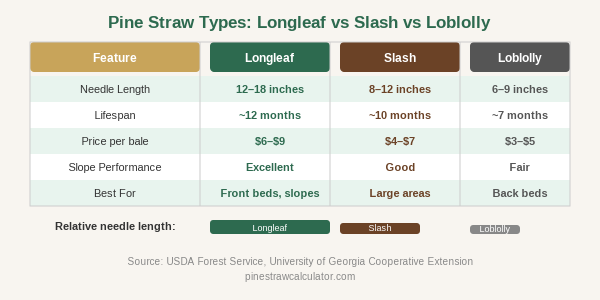
Not all pine straw is the same. Longleaf lasts 12 months, loblolly just 7. Here's how to pick the right type for your beds and budget.
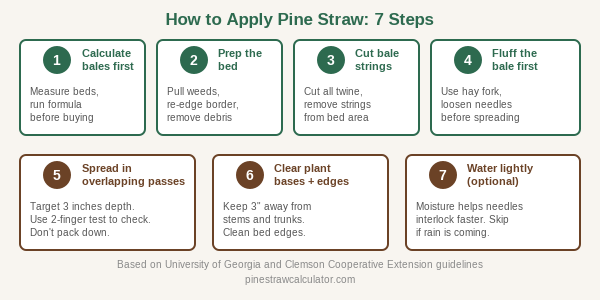
How to spread pine straw the right way: 7 steps from calculating bales to defining edges. The process landscape crews use for clean, lasting coverage.
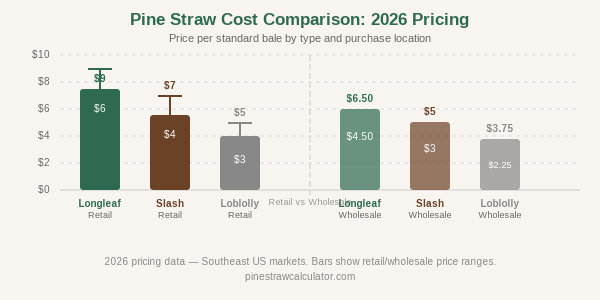
Pine straw costs $3–$9 per bale at retail. Professional installation runs $0.65–$1.25 per sq ft. Full 2026 price breakdown by type, quantity, and job size.
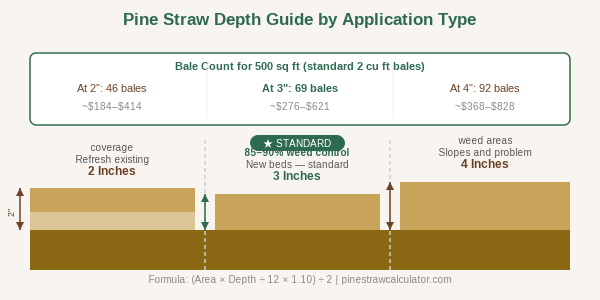
Spread pine straw 2 to 4 inches deep: 2 to refresh, 3 for new beds, 4 for slopes. Here's how depth changes weed control, moisture and cost.
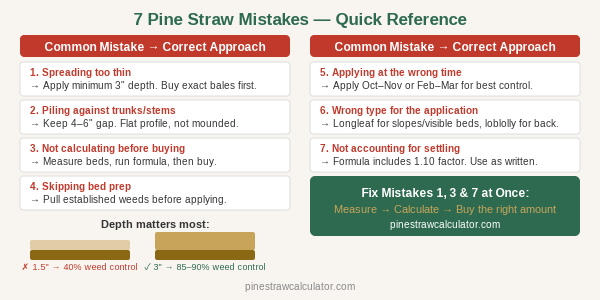
The 7 most common pine straw mistakes: applying too thin, piling it against tree trunks, wrong timing, and more. Each one costs money or kills plants.
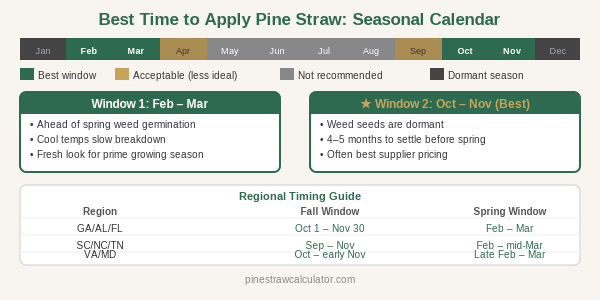
The best time for a pine straw application is late fall (October–November) or early spring (February–March). Seasonal timing guide by region: Southeast, Carolinas, and mid-Atlantic.
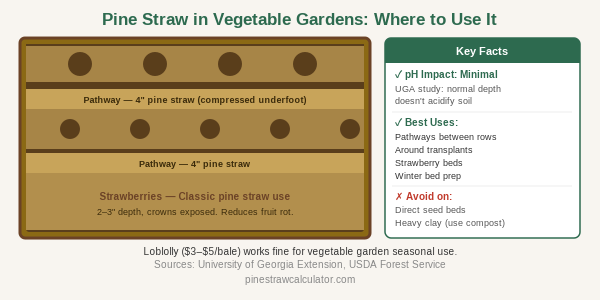
Yes — pine straw is good for vegetable gardens as a pathway mulch and around tomatoes, peppers, and strawberries. It won't acidify your soil at normal depths.
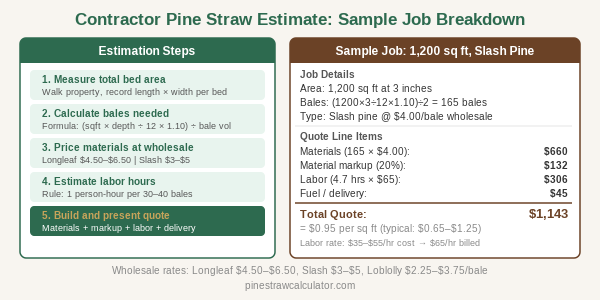
Landscaping contractors estimate pine straw jobs in five steps: measure, calculate bales, price materials, estimate labor, and build the quote. Here's the full process.