Best Time to Put Down Pine Straw: Seasonal Application Guide
The best time to apply pine straw is late fall or early spring. Here's a seasonal guide for the Southeast, Carolinas, and mid-Atlantic regions.
The best time to apply pine straw is late fall or early spring. Here's a seasonal guide for the Southeast, Carolinas, and mid-Atlantic regions.
Timing Your Pine Straw Application Correctly
You can put down pine straw any time of year. But timing your application around the weed cycle, weather patterns, and your local climate makes a real difference in how well it works and how long it lasts.
Here's when to apply, why it matters, and what to expect in each season.
Why Timing Matters
Pine straw's primary job is weed suppression. It does that job by blocking light from reaching the soil surface, preventing germination.
But if you apply pine straw after weed seeds have already germinated, you're just mulching over actively growing weeds. Those established seedlings don't care about light blocking; they're already up. You'll still get moisture retention and temperature benefits, but weed control will be noticeably worse.
The goal: get pine straw down before the major weed germination windows. There are two of them every year, spring and late summer.
The Two Best Times to Apply
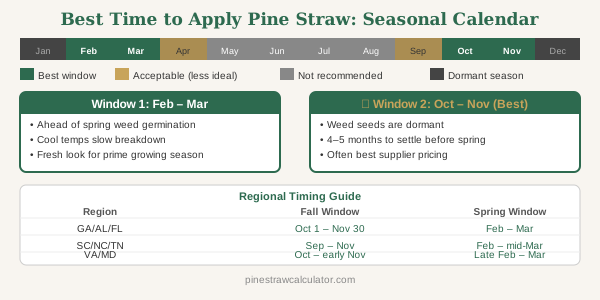
Window 1: Late October Through December
This is the best application window in most of the Southeast, Carolinas, and mid-Atlantic states.
- Here's why it works:
- Annual weed seeds are dormant. You're not mulching over germinating plants.
- Soil temperatures are dropping. Pine straw helps moderate the transition and protects root systems.
- The pine straw has 4–5 months to settle and establish before spring weed pressure begins.
- You'll get a full season of coverage before summer stresses it.
In Georgia, South Carolina, and Florida: October–November is ideal. In North Carolina and Virginia: October–early November before frost seasons vary by elevation.
Most landscapers book their biggest jobs in this window. It's also usually when suppliers offer the best pricing because summer inventory is being moved before the end-of-year slowdown.
Window 2: February Through Mid-March
The second-best window. You're catching beds before spring weed germination kicks in, which typically starts in earnest in March across most of the Southeast.
- February application means:
- Cool temperatures reduce the rate of pine straw breakdown
- You're ahead of the spring weed window
- Fresh coverage in time for the prime growing season, when your yard gets the most attention
If you missed the fall window or need to refresh, this is your shot. Don't wait until April. By then, many warm-season weeds are already emerging.
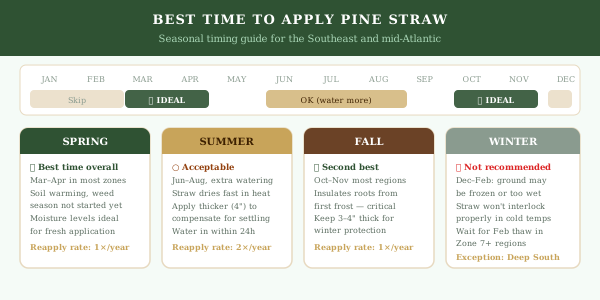
Summer Application (June–August)
Summer isn't the worst time to apply pine straw. It's just not the best.
- What you gain:
- Soil moisture retention is highly valuable in summer. A 3-inch layer keeps roots cooler and reduces watering needs by 30–40%.
- Temperature moderation. Pine straw buffers soil from peak heat.
- What you give up:
- Weed suppression is lower. Many weeds have already germinated.
- Pine straw breaks down faster in heat and humidity.
- Longleaf might last only 10 months instead of 12; loblolly can be done in 5–6 months.
If you're applying in summer, focus on moisture retention as your primary goal rather than weed control. You'll still need to hand-weed more than with a properly timed fall application.
For summer jobs, use longleaf or slash if possible. Loblolly will be looking thin by September if you apply in June.
Fall Application Details by Region
Deep South (Georgia, Alabama, Mississippi, Florida north of Orlando): Apply October 1 through November 30. Weed pressure drops sharply after the first cool nights. Pine straw applied in early October has the longest useful window: you get fall through spring before summer heat stresses it.
Carolinas and Middle South (South Carolina, North Carolina, Tennessee): Late September through November. Elevations above 2,000 feet see earlier dormancy; apply a few weeks earlier than coastal areas. Charlotte and the Piedmont are ideal in late October.
Mid-Atlantic (Virginia, Maryland): October through early November. Winters here can be hard on pine straw because freeze-thaw cycles break needles down faster than mild Southern winters. Longleaf holds up noticeably better than loblolly in these conditions.
Florida and Gulf Coast: October–December. Florida's weed cycles don't pause as dramatically as further north, but fall applications still benefit from reduced pressure. Apply before November to get ahead of cool-season weed flushes.
How Much Pine Straw You Need for Each Application
Whether you're applying fresh in fall or doing a spring refresh, the math is the same.
The formula: Bales = (Area × Depth ÷ 12 × 1.10) ÷ Bale Volume
For a new fall application over 700 sq ft at 3 inches deep with standard bales: (700 × 3 ÷ 12 × 1.10) ÷ 2 = 96 bales
For a spring refresh of those same beds, adding 1.5 inches over settled existing pine straw: (700 × 1.5 ÷ 12 × 1.10) ÷ 2 = 48 bales
Use our pine straw calculator to run these numbers for your specific beds. It handles any combination of area, depth, and bale size.
Signs Your Pine Straw Needs Refreshing
You don't need to wait for an annual date on the calendar. Watch for these signals:
Color shift: Fresh pine straw is reddish-amber. As it breaks down, it shifts toward gray-brown. When you see gray throughout most of the bed, it's time.
Depth under 2 inches: Push a finger down to soil. If you're hitting soil within an inch, weed suppression is compromised and a refresh is due.
Increased weed activity: More weeds than usual is a direct sign that coverage is failing. Don't ignore this and just pull weeds. Add pine straw to address the root cause.
Compacted mat: Old pine straw can mat together and shed water rather than absorbing it. If water is running off your beds instead of soaking in, the top layer needs to be loosened before adding fresh material.
Planning Your Year
A good rhythm for most homeowners:
November: Major application before winter. This is your biggest buy of the year, so budget for it. If you use longleaf, this one application often lasts through the following fall.
March: Inspect beds. Refresh thin spots only. You typically need 30–50% as many bales as a full new application.
July (optional): Quick summer check. If any beds are severely depleted, add a thin layer (1.5 to 2 inches) to retain summer moisture. Don't do a full application because loblolly will break down before fall and you'll be applying again anyway.
Getting the Most From Your Application
Regardless of when you apply, the fundamentals don't change. Get the depth right (3 inches for new applications, 2 inches for refreshes). Keep it off stems and trunks. Edge the beds before you apply.
Our pine straw application guide covers the full process step by step. And our depth guide explains how to pick the right thickness for different situations.
For the math on how many bales you need in any season, estimate your bales needed and you'll know your number before you call a supplier.
Check our about page for the university extension research behind these timing recommendations.