Can You Use Pine Straw in Vegetable Gardens? What You Need to Know
Pine straw works well in vegetable gardens as a pathway and row mulch. Here's how to use it safely around tomatoes, peppers, strawberries, and more.
Pine straw works well in vegetable gardens as a pathway and row mulch. Here's how to use it safely around tomatoes, peppers, strawberries, and more.
The Short Answer: Yes, With Some Conditions
Pine straw isn't the first mulch most vegetable gardeners reach for. But it works well for specific applications: pathways between rows, mulching around established transplants, and winter bed prep. Used correctly, it does the same jobs as wood mulch: moisture retention, temperature moderation, and weed suppression.
The questions worth answering are: where exactly does pine straw work best, where it doesn't, and what the pH myths are actually about.
The Soil Acidity Question
Let's get this out of the way first, because it stops a lot of gardeners from trying pine straw.
Pine needles are slightly acidic when fresh (pH around 3.5 to 4.5). That sounds alarming. But once pine needles are dried, baled, and applied to soil, multiple university extension studies have found minimal pH impact on the underlying soil.
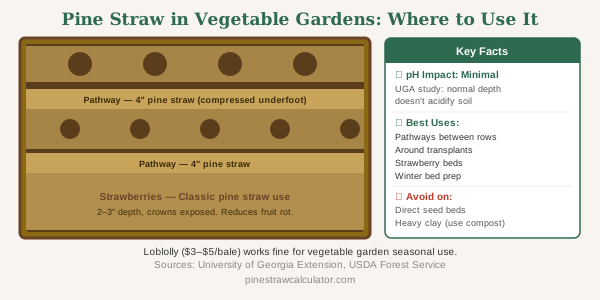
Research from the University of Georgia Cooperative Extension and USDA Forest Service both found that pine straw mulch at normal application depths (2–4 inches) does not significantly acidify soil. The acidity in fresh needles is largely volatilized during drying.
If you have naturally acidic soil already (below pH 6.0), monitor it annually. But for most vegetable gardens, which typically sit at pH 6.0 to 7.0, pine straw isn't going to cause a problem.
If you're genuinely worried, test your soil. A basic pH test kit runs $15–$20. Don't make a mulch decision based on a myth when you can just check.
Where Pine Straw Works Best in the Vegetable Garden
Between rows (pathways): This is the ideal use. Pine straw between your tomato rows, along your bean trellises, or down your squash walkways does exactly what you want: it keeps your feet out of the mud, suppresses weeds in areas you can't easily hoe, and breaks down slowly into the surrounding soil.
Apply 3–4 inches in pathways. They get compressed underfoot anyway, so start thick.
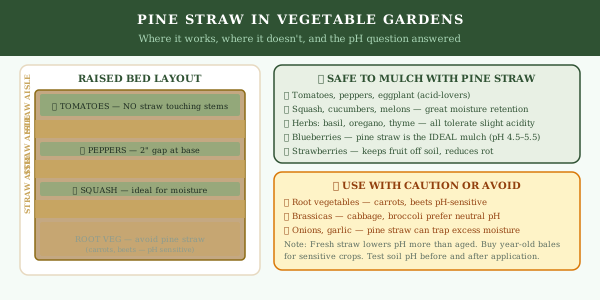
Around transplants: Once you've set out tomato, pepper, eggplant, and similar transplants, mulch around them (not touching the stem) with 2–3 inches of pine straw. It'll hold moisture through summer heat, reduce splash-back that spreads soil-borne diseases onto lower leaves, and keep your soil temperature more stable.
Keep pine straw 3 inches away from stems. In humid climates, pine straw touching plant stems can promote fungal issues.
Strawberry beds: Strawberries and pine straw have a long history. Pine straw is one of the traditional mulches for strawberry patches. It keeps fruit off the soil (reducing rot), provides good drainage, and the slightly acidic nature that worries other gardeners is actually a mild benefit for strawberries, which prefer pH 5.5 to 6.5.
Apply 2–3 inches around plants, allowing the crowns to remain exposed.
Winter cover: After your last harvest, pine straw is excellent for winter bed prep. A 3–4 inch layer over empty beds protects soil structure, prevents erosion, and breaks down slowly to add organic matter.
Where to Be Cautious
Root vegetables: Carrots, beets, radishes, and turnips grow into the soil, not up from it. Pine straw mulch between rows is fine here. But if you're using pine straw as a growing medium or mix, it can impede root penetration in a way that shredded wood mulch (which breaks down faster and integrates more easily) doesn't.
Seed beds: Don't apply pine straw directly on soil you're direct-seeding. The needles are too coarse for fine seed germination. Wait until seedlings are 3–4 inches tall before mulching around them.
Heavy clay soils: Pine straw breaks down more slowly than wood chips or straw. In clay-heavy soil that you're trying to improve over time, wood chips or compost does more for soil structure than pine straw. Use pine straw in pathways where soil amendment isn't the goal.
How Much Pine Straw Do You Need?
A typical vegetable garden with beds and pathways benefits from knowing your covered square footage.
Say you've got a garden area of 300 sq ft (total ground area), and about 40% of that is pathway (120 sq ft) that you want covered at 3 inches:
(120 × 3 ÷ 12 × 1.10) ÷ 2 = 16.5 bales → buy 17
For around-plant mulching in the beds themselves (say 150 sq ft at 2 inches): (150 × 2 ÷ 12 × 1.10) ÷ 2 = 13.75 bales → buy 14
Total: 31 bales for that garden.
Use our pine straw calculator to calculate both areas separately, then add the results. Knowing the exact count means you're not making extra runs mid-planting season.
Pine Straw vs. Other Vegetable Garden Mulches
Pine straw vs. straw (wheat/oat straw): Traditional straw breaks down faster and integrates into soil more readily. It's also lighter and easier to work around transplants. But straw often contains weed seeds, which isn't ideal. Pine straw is typically weed-free (the baling and drying process eliminates viable seeds).
Pine straw vs. shredded leaves: Shredded leaves are free, break down well, and add real nutrient value to soil. They're slightly better than pine straw in terms of soil improvement. The downside: they need shredding (whole leaves mat together), and they're not available year-round.
Pine straw vs. wood chips: Wood chips last longer and improve soil structure better over time. For permanent beds where you're not digging frequently, wood chips are a strong choice. But wood chips are harder to move aside when transplanting, harder to work into rows, and can tie up nitrogen as they decompose. That's something to watch for in heavy feeders like corn and squash.
Pine straw vs. plastic mulch: Black plastic mulch is common in commercial vegetable production for a reason: it's the most effective weed suppressant and soil temperature modifier. But it doesn't breathe, doesn't add organic matter, and eventually needs to be disposed of. Pine straw is a sustainable alternative for gardeners not focused on maximum yield optimization.
Tomatoes and Pine Straw
Tomatoes in particular benefit from pine straw. Here's the setup:
- Transplant your tomato seedling.
- Wait until it's 6 inches tall and settled (about 1 week post-transplant).
- Apply 2–3 inches of pine straw around the base, starting 3 inches from the stem.
- Extend to the full bed area.
This reduces blossom end rot (which is partly a moisture consistency issue), cuts down on early blight splash-up from soil, and keeps the root zone cool in peak summer.
Replace the pine straw mulch once mid-season if it's looking thin (loblolly) or leave it through harvest if you used longleaf.
What Type of Pine Straw to Use
For vegetable gardens, type matters less than in ornamental beds. Longleaf's longevity advantage is less important in a space you're actively working and refreshing seasonally.
Loblolly at $3–$5/bale is perfectly fine for pathways and seasonal bed mulching. Slash at $4–$7/bale gives you a bit more durability. Save your longleaf budget for your ornamental beds that need a full year of coverage.
More on the type differences (including the per-year cost comparison) in our pine straw types guide. And for cost planning on a vegetable garden project, the pine straw cost guide has current pricing by type and supplier.
Check our about page for the extension research and USDA sources we used to compile this information.