How Deep Should Pine Straw Be? Depth Guide for Every Application
Pine straw depth determines weed control, moisture retention, and cost. Here's the right depth for new beds, slopes, trees, and refreshing existing coverage.
Pine straw depth determines weed control, moisture retention, and cost. Here's the right depth for new beds, slopes, trees, and refreshing existing coverage.
Depth Is the Number That Actually Matters
Most homeowners obsess over which type of pine straw to buy, then throw it down without thinking about depth. That's backwards.
The depth you apply determines 80% of your weed control results. Buying premium longleaf and applying it at 1.5 inches is worse than buying cheap loblolly and applying it correctly at 3 inches. Get the depth right first.
The Standard Depths and When to Use Each
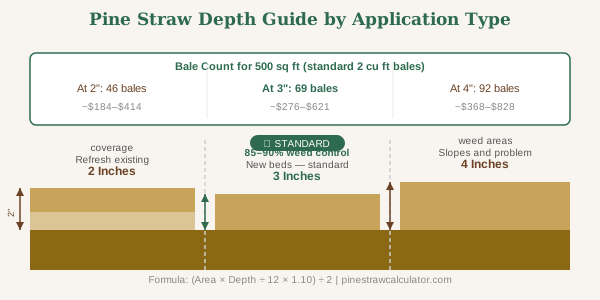
2 Inches: Refresh Applications
Two inches is appropriate when you're adding pine straw on top of an existing layer that still has some coverage. You're not starting from scratch; you're topping off.
At 2 inches, you don't get full weed suppression on bare soil. Light gets through. Seeds germinate. But on top of settled existing pine straw, 2 inches brings your total depth back up to 3 or more inches without piling too deep.
How to check if you need 2 or 3 inches: push a stick into your existing pine straw until it hits soil. If you've got 1.5 inches or more of settled coverage, a 2-inch refresh is fine. If you've got less than 1 inch, plan on a full 3-inch new application.
3 Inches: New Beds and Standard Applications
Three inches is the standard. It's what University of Georgia Cooperative Extension and Clemson Cooperative Extension both recommend for typical landscape beds.
At 3 inches, you get 85 to 90 percent weed suppression. Light-seeded annuals and most grasses won't germinate. Established perennial weeds will still push through (no mulch stops those), but day-to-day weed management becomes manageable.
Three inches also holds moisture effectively. After a rain, a 3-inch layer retains soil moisture for 2–3 days longer than unmulched soil, depending on your climate.
For most homeowners doing a new application, start here. Use our pine straw calculator to figure out how many bales you need for 3 inches over your bed area.
4 Inches: Problem Areas and Slopes
Four inches is for situations where extra performance matters:
Slopes: Pine straw on a grade needs enough mass to stay put in heavy rain and stay knit together through the season. Four inches gives you a denser mat. Combined with the natural interlocking of pine needles, a 4-inch application on a 15–20 degree slope will hold in conditions that would wash away 3 inches.
Heavy weed pressure: If a bed has a history of heavy weed germination, 4 inches suppresses more light and stops more seeds.
New beds with aggressive weeds: If you cleared a weedy area and are starting fresh, 4 inches plus a layer of newspaper or cardboard underneath is a highly effective combination.
Bare soil under trees: The root zone of established trees benefits from deep mulch, which mimics the natural forest floor and keeps soil temperatures stable.
When Not to Go Past 4 Inches
More isn't better. Here's what happens when you go too deep:
- Water doesn't reach the soil. A dense 5–6 inch layer of pine straw actually starts to shed water instead of letting it percolate through. Plants get less moisture, not more.
- Stems rot. Deep pine straw piled against plant stems and tree trunks stays wet. That moisture, especially in summer, promotes fungal disease and provides habitat for insects and rodents.
- It's wasteful. Every inch of depth beyond what you need is money spent for no benefit.
The absolute maximum for any application is 4–4.5 inches. If you're applying to a new bed with compacted soil or clay, go to 4 inches. Otherwise, 3 is the right target.
Calculating How Depth Affects Your Bale Count
Depth has a linear effect on material usage. Double the depth, double the bales. This makes depth one of the most important variables to get right before you buy.
The formula: Bales = (Area × Depth ÷ 12 × 1.10) ÷ Bale Volume
- For a 500 sq ft bed with standard 2 cu ft bales:
- At 2 inches: (500 × 2 ÷ 12 × 1.10) ÷ 2 = 45.8 → 46 bales
- At 3 inches: (500 × 3 ÷ 12 × 1.10) ÷ 2 = 68.8 → 69 bales
- At 4 inches: (500 × 4 ÷ 12 × 1.10) ÷ 2 = 91.7 → 92 bales
That's a 23-bale difference between 2 and 3 inches, roughly $100 to $175 in materials depending on pine straw type. Choosing the right depth for your situation isn't only about plant health; it's also about not spending money you don't need to.
Get an exact bale count for your specific area and depth before you buy.
Depth for Specific Situations
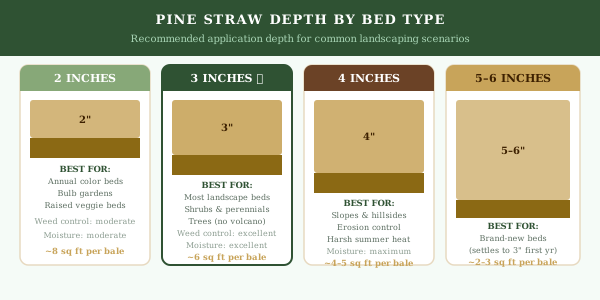
Foundation beds around the house: 3 inches, kept 4–6 inches away from the foundation. Mulch touching the foundation creates a moisture and pest pathway. Keep a small gap.
Tree root zones: 3 to 4 inches from 6 inches away from the trunk out to the drip line. Never pile against the trunk. This is the classic "mulch volcano" mistake that kills trees slowly. Flat or slightly concave is right.
Vegetable gardens: 2–3 inches between rows and around plants. Vegetable gardens have you digging frequently, so you don't want deep beds that you're constantly pushing aside. Lighter coverage works fine between rows. Our pine straw for vegetable gardens guide covers the specifics for different crops.
Steep slopes (over 20 degrees): 4 inches minimum. Also consider anchoring the first layer by wetting it down or laying it while the soil is moist. On very steep slopes, straw wattles (compacted pine straw rolls staked into the ground) are more effective than loose application.
Erosion control on bare soil: 4 inches plus stakes or erosion netting if the slope is severe. Pure pine straw without anchoring will shift on slopes over 30 degrees.
Perennial beds: 3 inches, keeping it away from the crowns of perennial plants. Some perennials don't re-emerge well if their crowns are smothered. Leave a small circle of bare soil around each crown.
How to Check Depth While You're Working
The two-finger test: push your index and middle fingers down through the pine straw until you hit soil. If both knuckles are covered, you're at roughly 3 inches. If only the first knuckle is covered, you're at about 1.5 inches.
For a more accurate check, bring a ruler and measure in a few spots every 10–15 minutes as you spread. It's easy to go thin without realizing it, especially on larger beds.
After It Settles
Fresh pine straw compresses over the first 2 to 4 weeks. A 3-inch application settles to about 2.5 inches. That's normal, and it's why the formula includes a 1.10 (10%) settling factor.
Don't apply extra pine straw right after installation to compensate for settling you expect to happen. Let it settle first, then assess whether you need to add more.
By month 3–4, check depth again. If you're below 2 inches anywhere, those spots are due for a refresh before weed pressure increases.
The Simple Rule to Remember
New bed or thin coverage: 3 inches. Refreshing existing coverage: 2 inches. Slope or problem area: 4 inches.
Everything else is a variation on that base. For mistakes to avoid during application, see our 7 pine straw mistakes guide. And for timing your applications, check our about page for the research sources we draw from.