How to Apply Pine Straw Like a Pro: Step-by-Step Guide
Applying pine straw the right way means better weed control, longer coverage, and less waste. Here's the step-by-step process contractors use.
Applying pine straw the right way means better weed control, longer coverage, and less waste. Here's the step-by-step process contractors use.
What Separates a Good Job From a Great One
Most homeowners can spread pine straw. But there's a difference between dumping it out and doing it right. Technique matters, especially if you want good weed suppression, a clean edge, and coverage that holds up the full season without thin spots.
This is how landscaping crews do it on professional jobs. You can do the same thing in your yard.
Before You Start: Calculate How Much You Need
Don't buy pine straw and then figure out if you have enough. Measure your beds first.
The formula: Bales Needed = (Area in sq ft × Depth in inches ÷ 12 × 1.10) ÷ Bale Volume
Example: You have three beds totaling 450 sq ft. You want a 3-inch layer. Using standard bales (2 cu ft each):
(450 × 3 ÷ 12 × 1.10) ÷ 2 = 61.9 → buy 63 bales
You can run this through our pine straw calculator in about 10 seconds. Do this before you drive to the nursery.
Tools You'll Need
You don't need anything special. Most of this is already in your garage:
- Hay fork or pitchfork. The best tool for fluffing and spreading pine straw. Don't use a rake; it drags the needles and creates uneven coverage.
- Garden gloves. Pine needles don't cut, but they're rough on skin after an hour of work.
- Wheelbarrow. Optional, but useful if you're hauling bales from a pallet in the driveway.
- Edger or flat spade. For defining bed edges before you apply.
- Hand pruners. To cut string on bales.
That's it. No special equipment required.
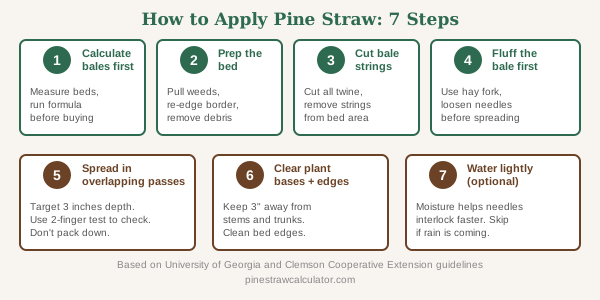
Step 1: Clean Up the Bed First
Don't lay pine straw over a messy bed. Pull visible weeds, remove any dead plant material, and cut back any groundcover that's crept outside its intended area.
You don't need to be obsessive about this. Small weeds that are just sprouting will get smothered by 3 inches of pine straw. But established weeds with thick root systems will push through anything. Get those out first.
If you have grass growing into the bed edges, this is also the time to re-edge with a flat spade. A crisp edge makes a huge difference in how the finished job looks.
Step 2: Cut the Bale Strings
Pine straw bales are bound with two or three pieces of twine. Cut all of them. If you miss one and try to fluff the bale while a string is still attached, the whole thing stays compacted and won't spread evenly.
Use pruners or a utility knife. Pull the strings out and dispose of them. Leftover bale strings in your beds are a mess because they tangle in tools and look bad from a distance.
Step 3: Break Up the Bale and Fluff
Lift sections of the bale with your hay fork. Work the fork in from the side, not the top. Lift and shake. The goal is to separate the compressed layers so the pine straw is loose and airy before you spread it.
A properly fluffed bale covers about 30–40% more area than an unfluffed one. If you just shake the bale out in chunks, you'll end up with dense clumps in some spots and thin coverage in others.

Step 4: Spread in Overlapping Passes
Start at one edge of the bed and work toward the other side. Use the hay fork to lay pine straw in overlapping layers about 6 inches wide per pass. Think of it like painting: methodical overlapping strokes.
Keep depth consistent. 3 inches is the standard. An easy check: push two fingers down into the pine straw until you hit soil. If both finger joints are covered, you're at roughly 3 inches.
Don't pack it down. Pine straw works best when it's slightly fluffy, which lets water percolate through to the soil. Packed pine straw sheds water instead of letting it through.
Step 5: Work Around Plant Bases Carefully
Keep pine straw 2–3 inches away from the base of shrubs, perennials, and tree trunks. Don't pile it against stems or bark.
Pine straw holds moisture. Direct contact with woody stems can promote rot, fungal issues, and pest habitat. This is one of the most common mistakes homeowners make, and it's one of the seven errors covered in our pine straw mistakes guide.
For trees, the ideal zone runs from 6 inches off the trunk out to the drip line. A slight depression (the opposite of a volcano: flat or slightly concave, not mounded) directs water toward roots rather than away from them.
Step 6: Define the Edges
After you've spread the interior of the bed, use the back of your hay fork to push pine straw away from bed edges. You want the edge to look clean, with about an inch or two of soil visible at the border between the bed and the lawn.
Some contractors use a leaf blower on low to clean up any pine needles that scattered onto the lawn or driveway. A quick pass makes the whole job look finished.
Step 7: Water Lightly (Optional but Helpful)
You don't have to water pine straw in, but a light pass with the hose helps. Moisture causes the needles to interlock more quickly, speeding up that settling process that anchors the mat against wind and rain.
If rain is coming in the next 24 hours, skip this step. Nature handles it.
Refreshing Existing Pine Straw
If you're adding pine straw over an existing layer, you don't need to remove the old material. Just loosen the top layer with a rake or fork. It compacts over time and can shed water if not broken up.
Add the new layer on top. You're aiming for your total depth to be 3 inches. So if you've got 1.5 inches of settled old pine straw, you need to add about 1.5 inches of fresh material.
Run the formula with your actual add depth, not 3 inches. For 400 sq ft adding 1.5 inches: (400 × 1.5 ÷ 12 × 1.10) ÷ 2 = 27.5 → buy 28 bales
Estimate your bales needed this way and you'll buy exactly the right amount for a refresh job.
How Long Does Application Take?
- For one person working at a steady pace:
- 50 bales: about 2 hours
- 100 bales: about 3.5–4 hours
- 200 bales: a full day with breaks
Having a second person makes it significantly faster. One person fluffs and forks from the bale, the other spreads. You can do 200 bales in 5–6 hours with two people.
When to Apply
Timing matters more than most people think. You get the best results from pine straw applied in late fall (weed seeds are less active) or early spring before weeds germinate. Our seasonal pine straw application guide goes into detail on the best windows by region.
For most of the Southeast, the two key windows are October through November and February through March. If you're putting down pine straw in July, you're fighting against germinated weeds and summer heat. It still works, but expect to work harder on weed control.
The One Thing That Matters Most
Depth. Everything else is secondary.
Two inches of pine straw gives you maybe 50% weed suppression. Three inches gets you to 85–90%. Four inches on new beds or problem areas gets you close to 95%.
Get the depth right and most of the rest takes care of itself. Check your work every 20 minutes as you spread; it's easy to go thin without noticing.
For more on how to dial in your depth for different situations, see our pine straw depth guide. And if you want to know what the pros charge to do this for you, our about page links to contractor pricing resources.